DOT-compliant tint for trucks, fleets and motor homes
Commercial vehicles answer to a federal glazing standard, not the Texas one. We spec, install and meter window film to 49 CFR §393.60 — so your trucks clear roadside inspection instead of collecting violations.
What 49 CFR §393.60 actually requires
Commercial motor vehicles are not held to the Texas passenger-car tint law. The federal standard in 49 CFR §393.60(d) allows tinted glazing on the windshield and on the windows immediately to the driver's right and left only if light transmittance through that glass stays at or above 70 percent.
Everything behind the driver sits outside that paragraph. Sleeper and bunk windows, rear side glass, and the living-area glass on a motor home can run as dark as you want — which is where most of the heat and privacy gain on a commercial unit actually comes from.
What matters is the reading on the finished window, not the number on the film box. Factory glass already absorbs light, so a film rated at 70 percent laid over tinted glass lands well under the limit. We spec to the net reading and confirm it with a meter before the vehicle leaves.
Compliance At a Glance
What a front-glass violation actually costs
Tint isn't an out-of-service defect — it's a citation, a CSA score hit, and a truck that has to come back in to have film stripped. All of it is avoidable at install.
Cited at roadside
Inspectors meter front glass. Under 70 percent on a commercial vehicle is a §393.60(d) violation written onto the inspection report.
CSA score damage
The violation feeds the carrier's Vehicle Maintenance BASIC — it follows the operating record, not just the driver's day.
Downtime to redo it
Non-compliant film has to come off and go back on — a second visit on work you already paid for once.
Darkness where it's allowed
§393.60(d) reaches the windshield and front doors only. Sleepers, bunks and rear glass can go as dark as you like.
One spec across the fleet
Every unit built to the same window-by-window spec, so a truck out of any yard reads the same on a meter.
Documented at handoff
You leave with the meter reading and the film spec for each window, ready for the next roadside stop.
HITEK Ceramic Black, specced by glass zone
One nano-ceramic film across three glass zones — a near-clear shade that keeps the driver's glass legal, and progressively darker shades everywhere the rule doesn't reach.
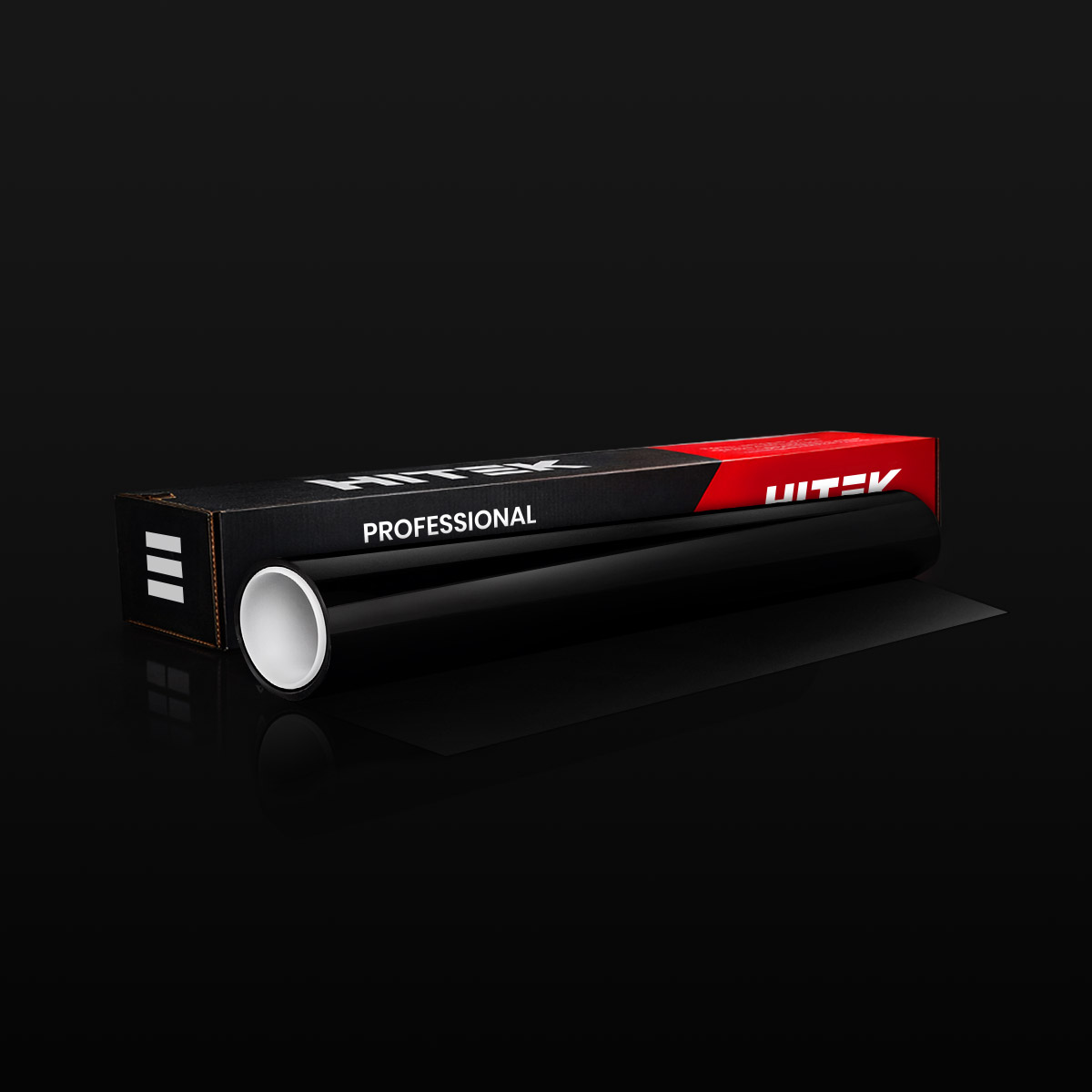
The near-clear end of the Ceramic Black line. Nano-ceramic particles reject infrared heat without pulling light transmittance below the federal 70 percent floor — so the driver's glass stays legal and the cab still runs cooler.
- Holds net transmittance at or above 70%
- Rejects infrared heat, not visible light
- Blocks 99% of UV
- Metal-free — no GPS, CB or cellular interference
- Lifetime transferable manufacturer warranty
Behind the driver there is no federal transmittance limit. A mid shade cuts heat and daytime glare in the bunk and the crew cab without making the interior feel closed in.
- No federal VLT limit on this glass
- Strong heat and glare reduction
- Daytime privacy for the bunk
- Color-stable black that won't turn purple
- Lifetime transferable manufacturer warranty
The darkest end of the line, for living-area and cargo glass where privacy matters more than the view out. This is where a commercial unit picks up most of its heat rejection.
- Up to 78% infrared rejection at 5% shade
- Full day and night privacy
- Keeps living-area interiors far cooler
- Scratch-resistant coat that survives fleet washing
- Lifetime transferable manufacturer warranty
Compliant on the first install
Four steps that put the meter reading on our side of the handoff instead of the inspector's.
Confirm the class
We establish whether the unit is a commercial motor vehicle, which glass §393.60 reaches, and what the existing glass already measures.
Spec each window
Front glass gets a shade that holds 70 percent net. Everything behind the driver gets the shade you want. One sheet, per vehicle.
Install
Precision-cut film applied to the inside of the glass, edge to edge, in a controlled bay — no light gaps, no lifted edges on high-cycle door glass.
Meter and document
We take a transmittance reading on the finished windows and hand you the numbers with the film spec, ready for the next inspection.
Commercial units out of our bay
A look at recent truck, fleet and motor-home installs.
Bring the unit by, or send the list
Tell us what's in the fleet — unit types, glass and how many — and we'll come back with a per-vehicle spec and a schedule that keeps trucks moving.
DOT & commercial tint questions, answered
What does 49 CFR §393.60 actually limit?
Doesn't Texas allow 25 percent?
Is non-compliant tint an out-of-service violation?
Can I still get real heat rejection on the front doors?
How dark can the sleeper or rear glass go?
Will the film interfere with GPS or the CB?
Keep the fleet legal and moving.
Send us the unit list and we'll come back with a per-vehicle spec, a schedule and a quote.